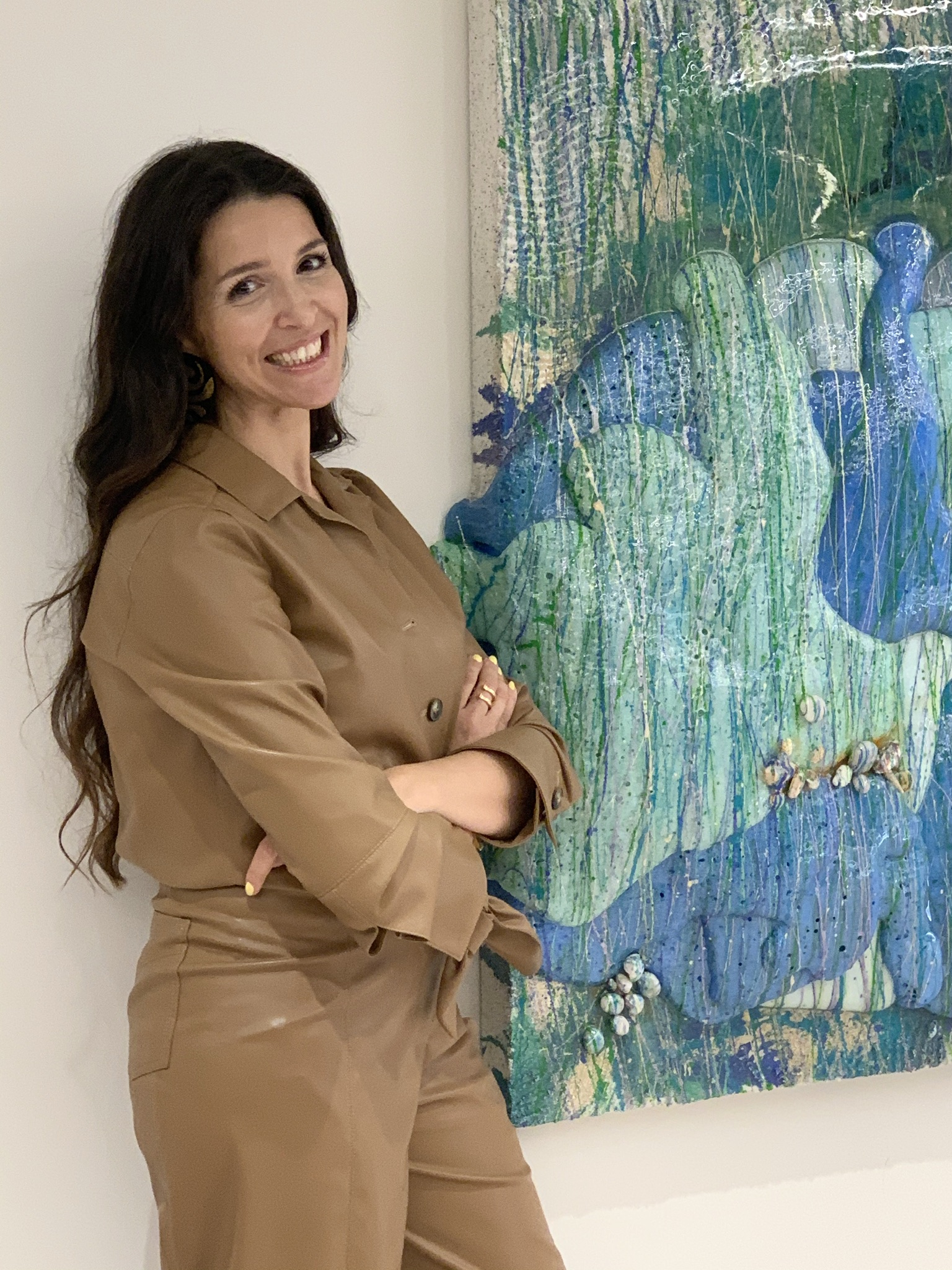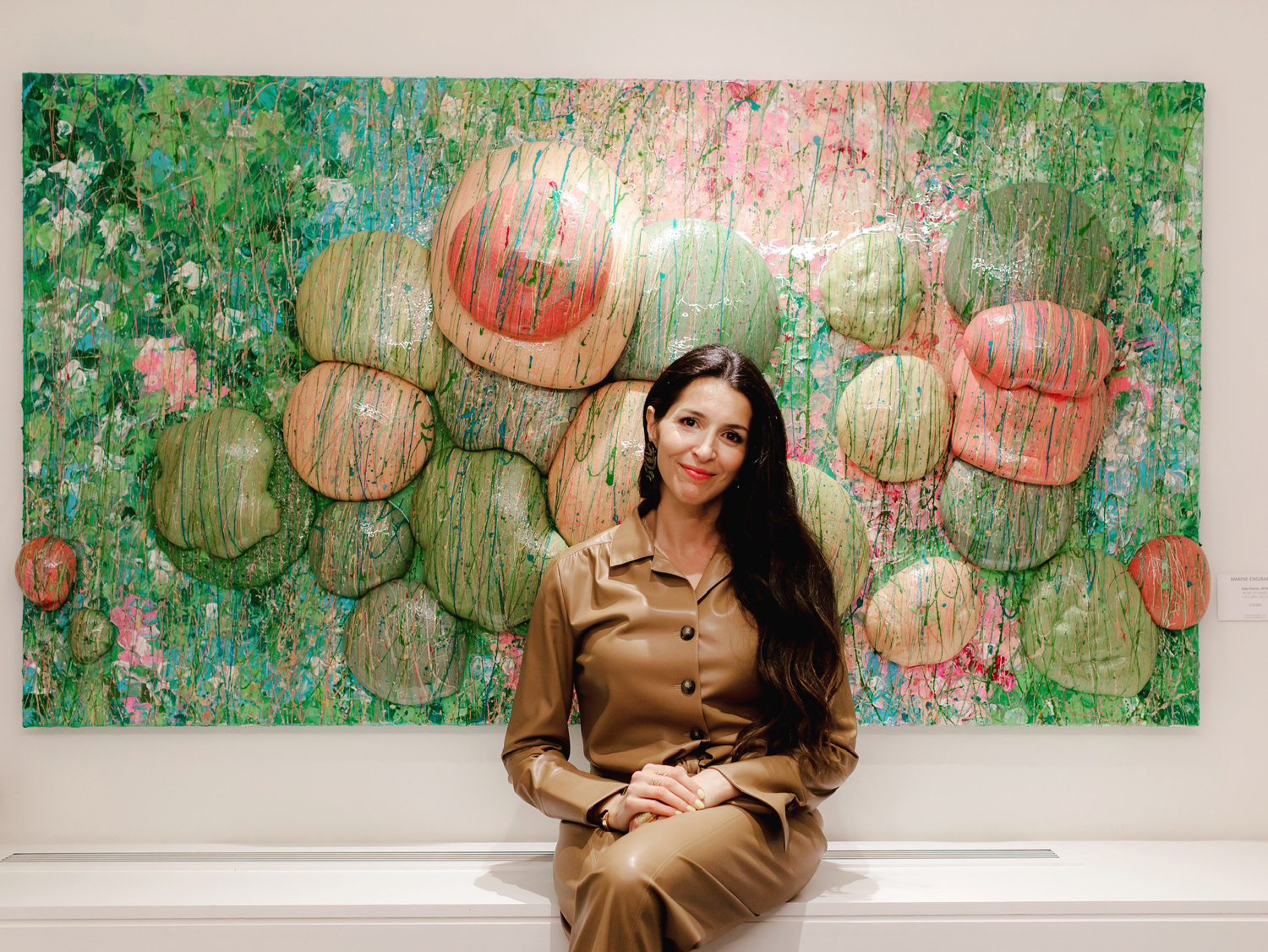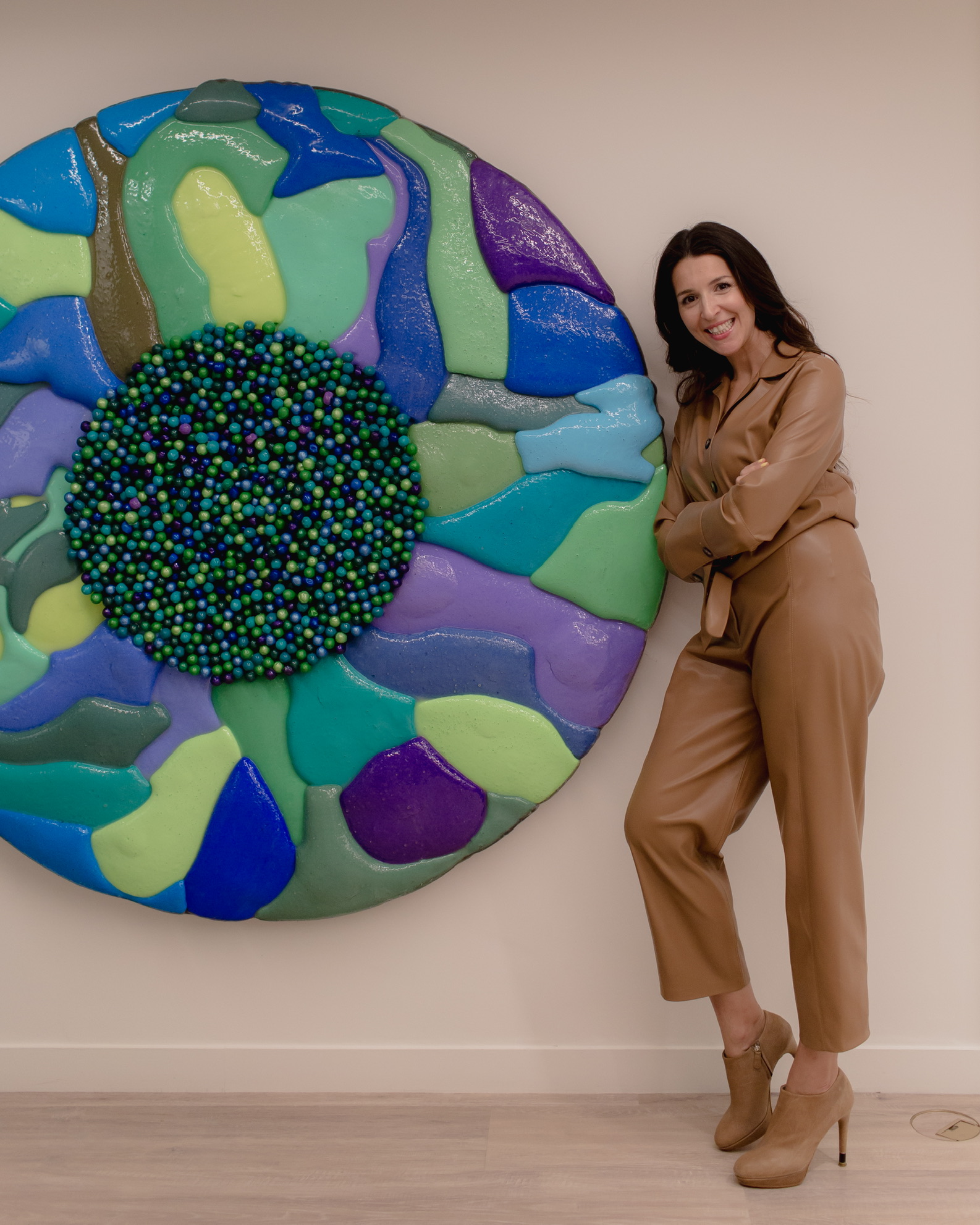


Marine Engibaryan is one of the artists who, although exposed to art from the very early age, made conscious effort to pursue artistic practices at a much later time, as an established adult. As a kid, Marine and her family lived in Erevan until 1991. This was where her first encounter with the world of art took place, thanks to her father who was impartial to art. He fostered her taste in art from early on, and showed her works by great masters at museums or in albums and arranged studio visits with artist friends. One such studio, frequented by Marine and her father, belonged to the renowned Armenian painter Varuzhan Vardanyan. The creative atmosphere and the master’s charisma engrossed the 5-year-old Marine. It was his influence, too, that pushed her to pick up paints and canvas and make her first steps in painting. Marine’s artistic aspirations did not find any support in the family, however, who saw a different future for her. This was the reason she could not get trained in the arts professionally and had to self-teach. Early on she was influenced in a major way by the impressionist art, including by Claude Monet, Vincent van Gogh, Camille Pissarro, Georges Seurat and Paul Signac. She then experimented with pointillism as well, forming her compositions by thick brushstroke points. This strand of influence amalgamated with the legacy of Armenian art—its bright, rich, almost gaudy colors. This can be seen in her early work where bright saturated colors and fragmented brushwork produce a vibrating atmosphere of a full life.
Marine Engibaryan graduated from the School of International Relations at MGIMO and built a successful diplomatic career as an attaché and third secretary at the Department of International Relations of the Russian Ministry of Foreign Affairs. As a staffer at the Commission of the Russian Federation for UNESCO, she worked in culture, education, and organized art exhibitions. Contributor to the cultural life but in a different role, the artist was persistently pursuing her own artistic practice. Marine’s first solo show took place under the auspices of the Commission at the Zurab Tsereteli Art Gallery in 2003.
Then she had to temporarily abandon her art because of newborn children and moving, first to the U.S. and then to Spain. Curiously, this off period had a significant impact on formation of her artistic style later. She saw current Western art and was particularly impressed by American contemporary artists. This inspired Marine to experiment with different materials and techniques, and set her on a path of finding her own language. Having returned to Moscow, the artist finally could focus on serious creative practice. Marine was on a quest for a novel technique to enable a unique visual language that should become an unmistakable signature. Through trial and error, the artist did successfully develop her unique technique. Her works have moved from paintings per se and more into objects. For Marine, it is important still to never stop searching, always welcome improvisation and new experiences, so more is yet to come. Marine’s current plans include, among other things, to work in ceramics (she is studying it at the Stroganov Moscow State University of Arts and Industry). Her later works were featured at Level 8 (Lomaka Gallery, London, 2019) and as part of the Perfect project (Heritage Gallery, Moscow, 2020).
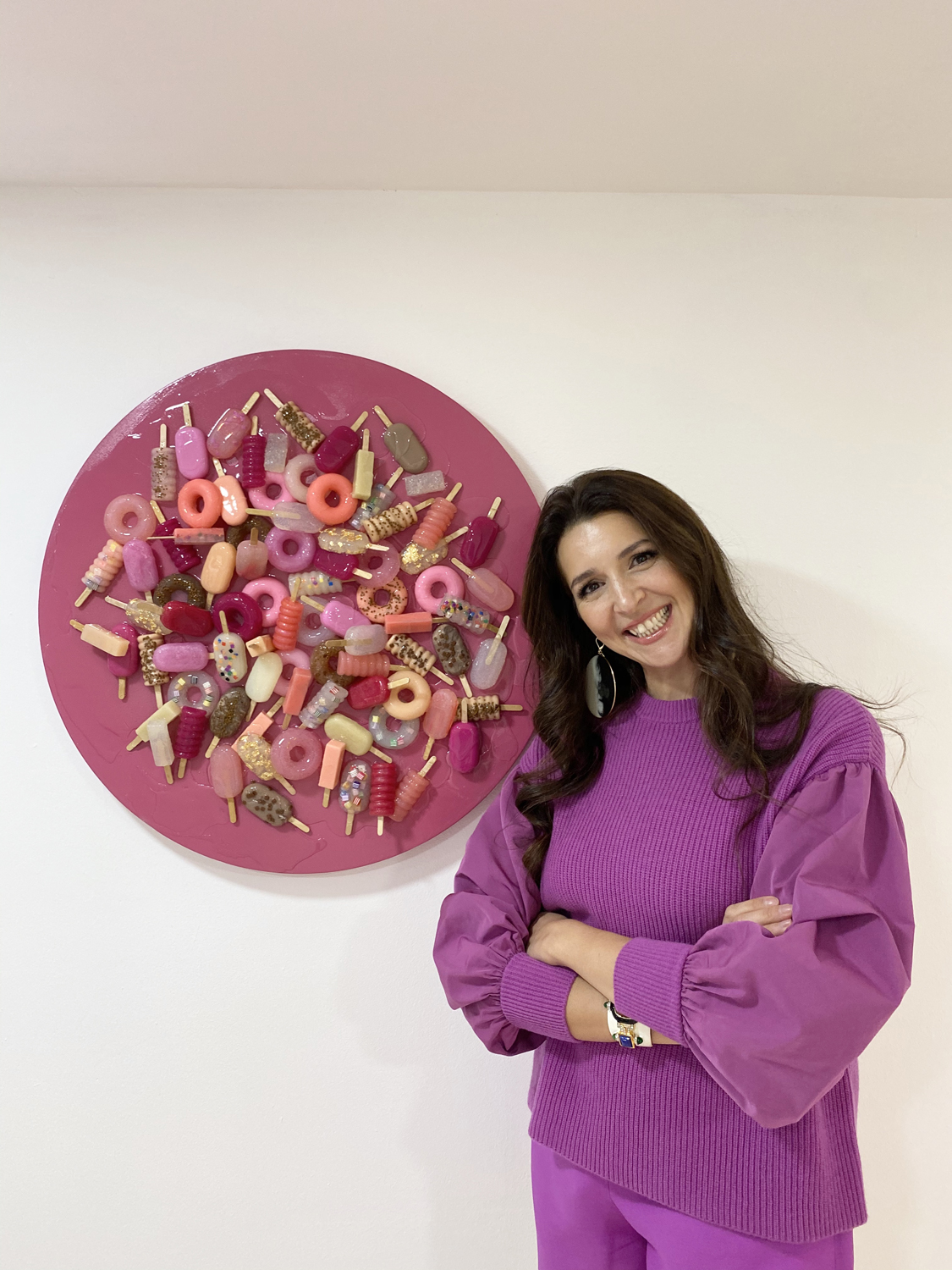
When you are around Marine’s works you get the long-forgotten childhood experience: excitement, expectation and awe that a kid experiences in a candy shop among an assortment of color sweets, stretchy nougat, clouds of colored cream. It seems that the artist engages not only the viewer’s visual perception but also phantomly stimulates their taste receptors. There can be no doubt that her objects have a sweet taste and smell, an illusion that further amplifies the uplifting impression her work makes. Marine’s compositions achieve fine color harmony and convey her moods and emotions. The expressed feelings range from sincerity, happiness to love of life and joy. A carefree impression would be superficial as Marine’s works address global matters. Take Ocean of Life (2018), where the author raises the increasingly urgent issue of global ocean pollution. Ecology and environmental awareness are key in It’s All in Our Hands, Save the Planet! (2019). This work is a number of fluid materials mixing into a single mass, out of which human hands emerge to the surface—maybe calling to us, maybe drowning in this whirlpool. Other works address social issues as well. For example, Naked Skin (2018) explore racial equality and unity for all people on Earth. Different shades of skin literally overlap to form a centripetal composition. Fake Tastes (2019) is a rhetorical question to the viewer about the influence of modern stereotypes and public opinions on our individual lives. Its “petrified” ice-creams of all varieties are an ironic depiction by the artist of the plasticky world of false values that constrict our personalities more and more. Another complex work is Bubble Gum (2018), where the image of the planet is camouflaged in the deliberately bright, neon-like colors of the gum. The art by Marine Engibaryan is a prime example of addressing sensitive and global themes through clear means of artistic expression full of life, color and sincere joy.
Polina Mogilina